
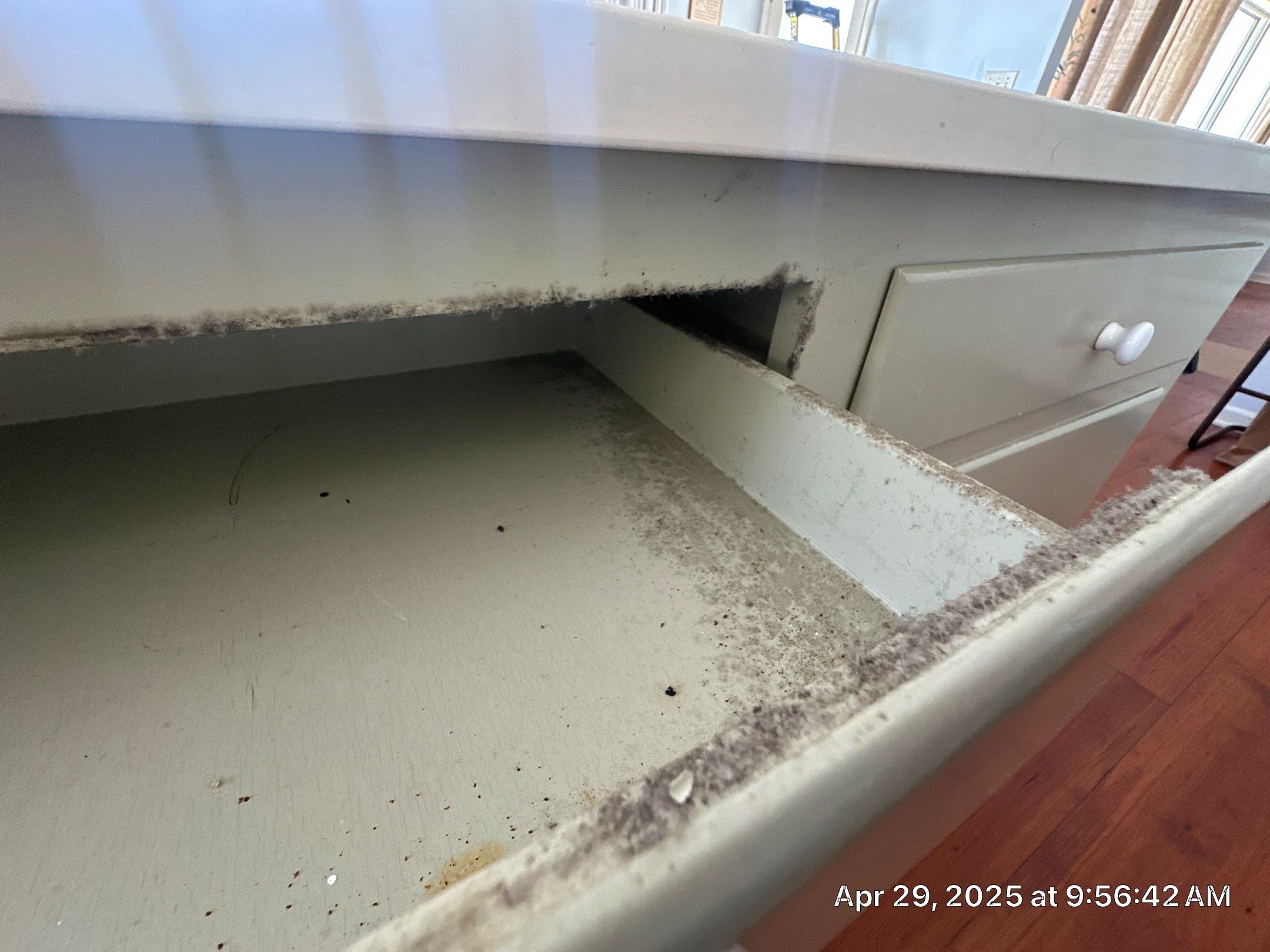
Working as an environmental consultant in the Charleston, South Carolina area for nearly a decade has allowed me to observe and document the most common sources of moisture, and subsequently mold growth, in our homes. This article seeks to inform the reader to assist in the prevention of excessive moisture and mold growth in their home.
The following are based on our experience performing mold and moisture assessments in the lowcountry area. While these sources are the most common, other more complicated contributors to mold growth can also be present. Furthermore, in almost every case, there are multiple contributing factors to mold growth and typically more than one is present in homes with mold issues.
1. Elevated Relative Humidity

The EPA recommends relative humidity be kept between 30 and 50 percent. Humidity above 60% can contribute to mold growth. In our climate, keeping humidity below 50% is very difficult without dehumidification. My recommendation is to keep below 55%. Dehumidification via a whole-home dehumidifier is the best option to solve this issue, as it addresses each room and pulls moisture out of all conditioned areas. Many people don’t know this, but lower humidity also means a more comfortable indoor climate. Lowering humidity also decreases the likelihood of condensation on windows, HVAC registers, etc.
2. Warm, Outdoor Air Intrusion

I receive countless phone calls about mold “growing out of my bathroom ventilation fan fixture!” Most often, the growth is actually limited to the outside of the duct. This happens because:
A) The bathroom is the most humid place in your house due to water sources and use, and
B) Warm, outside air is traveling into the bathroom ventilation duct, mixing with cooler but humid interior air, causing condensation.
I also see this commonly around cooktop hoods and other systems connected to the exterior. This photo was taken next to a horizontal cooktop hood, routed to the exterior.
3. Poor Ventilation

In simple terms, ventilation is the movement of air. Poor ventilation occurs in many areas such as closets, bathrooms, and tall ceilings. Specifically, I see problems in buildings with tall ceilings because not only is there poor ventilation up there, but warm and wet air rises, thus providing an environment conducive to mold growth. In my own parents’ house, we solved this with the simple installation of a ceiling fan that now provides an increase in ventilation and doesn’t allow warm, humid air to hang out along the ceiling.
4. Improperly Sealed Fixtures on Ceilings

HVAC registers (the vent that supplies conditioned air to a space) are so often improperly sealed in our area that it surprises me. When this happens, warm attic (or ceiling void) air can mix with the conditioned air causing condensation. Over enough time, you will notice mold growth on ceilings adjacent to the register, on the register itself, or within the boot. A properly sealed register and boot will prevent the misdirection of conditioned air and the intrusion of attic air. The same idea applies to light fixtures (can lights are notorious) and any other ceiling-mounted equipment.
5. Leaks

When (not if) you have a water intrusion event, acting quickly is critical. Make sure your remediation contractor is certified by the IICRC, and request that they start drying as quickly as possible. The faster building materials are dried, the less likely it is that they will have to be removed and replaced. Building materials that remain wet for more than 48 hours are typically recommended for removal and replacement due to deterioration and the likelihood of future fungal growth.
There are many other potential sources of mold within a Charleston-area home such as crawlspace issues, building envelope problems (spray-foam attic insulation), and improperly mitigated historical moisture intrusion events.
Before you perform any destructive mitigation, it’s important to be aware of the presence of asbestos containing materials and lead-based paints. These materials are heavily regulated and disturbing them can cause exposures related to serious health problems.
About High Tide Environmental in Charleston, SC
High Tide Environmental is an environmental consulting firm based in Charleston, South Carolina. We provide asbestos, lead-based paint, and mold/moisture testing and consulting services for commercial, public, and residential clients. If you have an issue, suspect an issue, or need information for due diligence, please contact us.
You must be logged in to post a comment.