
Fortunately, today we are acutely aware of the dangers and health risks that asbestos can pose, but contractors throughout much of the 1900s did not have the same information we have now. As a result, asbestos was widely used in residential construction for decades before it was finally phased out of the industry.
Identifying potential warning signs is extremely important for homeowners who want to protect their health, especially in the Lowcountry, where many historic homes, while beautiful, may contain hazardous materials. In this article, we’ll explore five of the most common indicators that your home may contain asbestos and outline the steps you should take if you suspect its presence.
1. Your Home Was Built Before the 1980’s
Homes built prior to the 80s – specifically between the 1940s – 1980s – were frequently built using asbestos. We discovered asbestos’ harmful effects in the early 1900s, so why was it used?
Asbestos was commonly added to insulation, flooring, and textured finishes because it was both inexpensive and fire-retardant. Additionally, it was resistant against chemicals, water, and electricity, making it seem like the perfect material for construction. Despite being known for causing asbestosis and cancer, asbestos materials in the construction industry weren’t phased out until the mid-eighties.
If your home was built during this era, even if it has had renovations over the years, it is very possible it still lurks in your home. These materials can live sneakily behind walls, under floors, or above ceilings which is why it’s critical to schedule an asbestos inspection of your property.
2. Older Insulation Materials
Asbestos was used frequently in insulation around pipes, boilers, furnaces, attics, and more. Essentially, older homes used it everywhere they could. One of the most well-known examples of this is vermiculite insulation. It looks like small, grey or brown pebbles with a texture that may resemble coarse sand and is a huge warning sign for asbestos exposure in the home. It was used throughout the 40s to the 90s due to its odorless, fire-resistant properties. When checking, be certain to avoid handling it directly to prevent health risks.
Other older insulation materials are hazardous and become increasingly so when they either deteriorate or disturbed in some way. Disturbance causes asbestos fibers to release and float throughout the air. If any insulation appears damaged, outdated, or otherwise disturbed, you should immediately contact a professional for inspection.
3. Older Vinyl Floor Tiles
Vinyl flooring that was installed from the 50s to the 80s may contain asbestos in the adhesives on the back of the floor tiles. Specifically, it will look like black adhesive. It was well-praised for its durability without realizing the harmful effects that it would later cause. They’re especially dangerous if sanded, cracked, or removed improperly, making renovation a dangerous task that should only be handled by a professional. Flooring renovations are one of the most common reasons for asbestos release into the home, so any work requires utmost attention and care to keep everyone safe.
4. Textured Ceilings or Walls
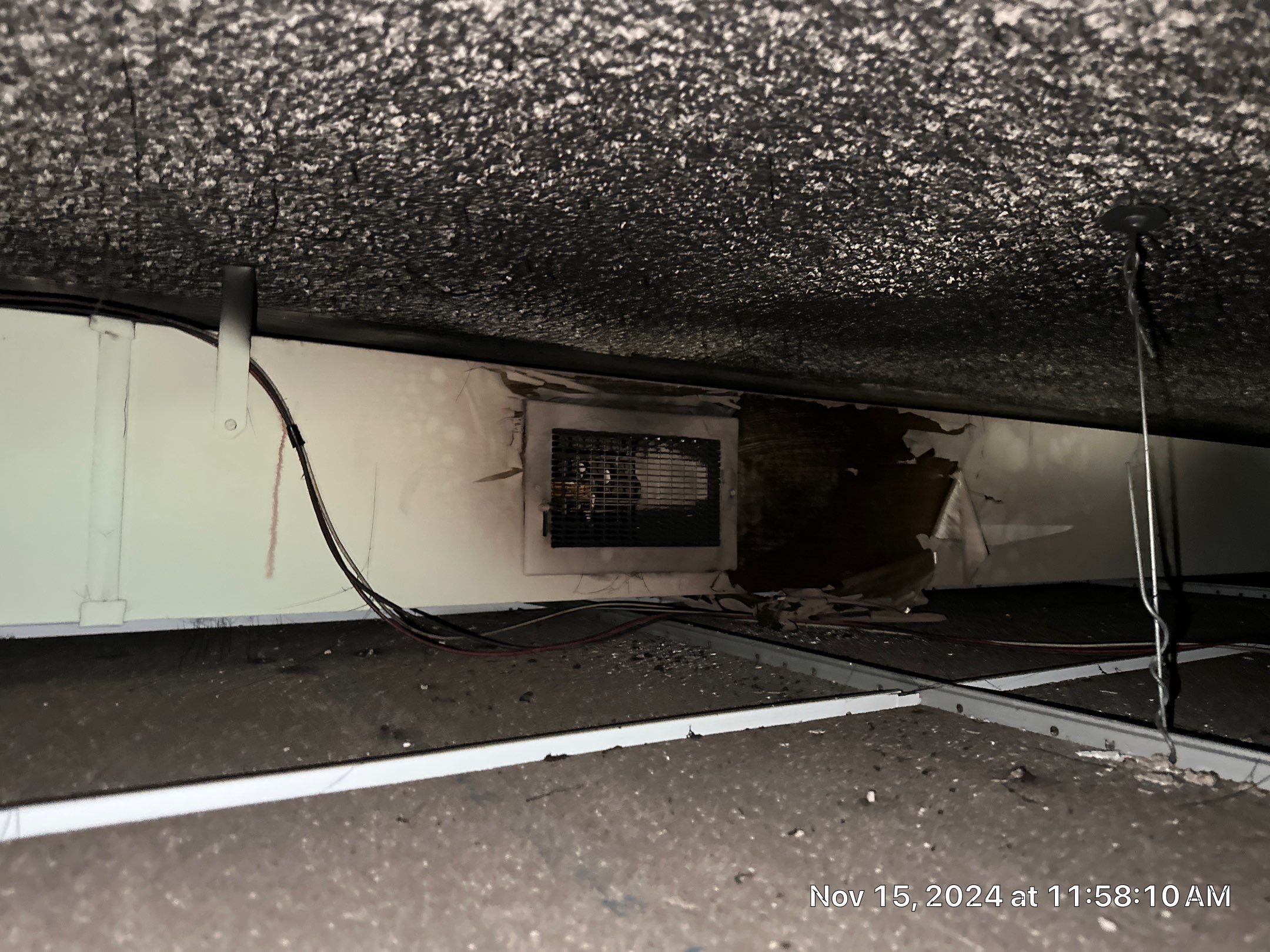
Popcorn ceilings, textured wall coating and finishes that were installed decades ago frequently contain asbestos. In fact, ceiling tiles and surfaces are the largest risk factor for asbestos in older properties, appearing here more frequently than in other areas. In the ceiling or in the walls, the materials are usually safe if undisturbed, but common damages like water leaks, aging, or any renovations can quickly turn sour, causing asbestos fibers to become airborne and sprinkle all over the home.
5. Corrugated Roofing
The roof is often one of the more overlooked areas in the home, but hidden dangers may lurk above your head. Corrugated roofing sheets, particularly ones that are used on garages, sheds, and older siding may contain cement with asbestos. If the roofing looks worn or brittle, it is likely that it was made with an asbestos cement, but it can be hard to detect to the untrained eye. Any roof repairs – like drilling, cutting, or replacement can be especially dangerous. Additionally, general wear-and-tear from weather exposure will eventually cause asbestos to release into the air. This can transfer in and around your home.
Protect Your Health! Schedule an Asbestos Inspection with High Tide Environmental in Charleston, SC
Asbestos typically can’t be identified using just your sense of sight, but any sort of disturbance can put you and your family’s health at serious risk. If you have noticed any of these risk factors and believe that you may have asbestos in your home, get in touch with a professional as soon as possible for asbestos testing and guidance on your next steps. At High Tide Environmental, we’re dedicated to protecting our homeowners, and we’re trained to look for the warning signs that we need to make your home safe and sound.